


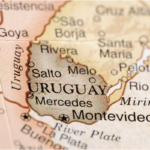
Uruguay stands out for its strong democratic system, characterized by the alternation in power of its three main political parties. This approach ensures respect for the business environment and establishes clear rules, contributing to one of the most egalitarian countries with the highest per capita income in Latin America and the Caribbean.
In 2019, its economy experienced 0.2% growth, marking more than 17 years of continuous expansion, representing the longest period of sustained growth in its history. Despite moderate growth, the country has proven to be resilient to regional instability, thanks to its macroeconomic stability, prudent policies, export diversification, lower banking vulnerability and considerable reserves, which have allowed it to maintain stability in a challenging global and regional context.
The Investment Promotion and Protection Law No. 16,906 guarantees equitable treatment for foreign investment, with no restrictions on the repatriation of capital or on the transfer of profits, dividends and interest. This openness has positioned Uruguay among the most attractive economies to invest in worldwide, according to the ESG index, which values governance, as well as social and environmental aspects, and is also reflected in the EMBI country risk indicator, highlighting Uruguay as the safest destination for emerging investments.
Uruguay promotes the free trade of foreign exchange, without the need for prior authorization for the movement of money or restrictions on the entry and exit of capital. The country does not impose export restrictions on agroindustrial products.The sector accounted for 82% of exports in 2019. With 16.4 million hectares suitable for agriculture, more than 90% of its territory, and a four-fold increase in land value in the last 15 years, Uruguay has enormous potential to increase its agro-industrial production. With a population of 3.5 million, the country produces food for 28 million people, and global demand for agricultural products is projected to continue to grow, driven by consumption in developing countries.
Uruguay is part of the world’s leading food exporting region, together with Argentina, Brazil and Paraguay, and has significant comparative advantages in international food production. It stands out for the quality and safety of its agricultural products, backed by rigorous sanitary controls and a traceability system in cattle breeding that ensures transparency from the birth of the animal until it reaches the consumer. This traceability approach extends to other products such as poultry, honey, citrus and wines.
Contáctanos para más información
Finally, Uruguay is committed to sustainable agricultural development, implementing plans for responsible soil management and sustainable dairy production, among others, thus ensuring a promising future for its agroindustrial sector.
Economic importance of the Agroindustrial Sector in Uruguay
Participation in GDP
Agriculture and agroindustrial value chains play a fundamental role in the economy, contributing significantly to the economic dynamism described above. In 2019, the agribusiness sector accounted for 11% of Uruguay’s Gross Domestic Product (GDP). This contribution was evenly distributed between the primary sector (which includes agriculture, livestock and forestry) and the agricultural industries, with 6% and 5% of GDP, respectively. Other sectors such as “Transportation, Storage and Communications” are also closely linked to the development and growth of the agricultural and agroindustrial sectors in the country.
Foreign Investment
The escalation in international commodity prices over the last decade, combined with a favorable business environment and Uruguay’s outstanding comparative advantage in the production of land-intensive products, has had a significant effect on attracting Foreign Direct Investment (FDI) to Uruguay’s agricultural and agro-industrial sector.
The agricultural sector has been the main beneficiary of these investments, especially in the integration of technology in cereal production. Argentina’s companies have played a crucial role in this area. Additionally, some of the world’s largest grain traders, such as ADM, Bunge, Cargill, Louis Dreyfus and COFCO, have established operations in Uruguay.
Value Added
The relevance of the agricultural sector in Uruguay is so significant that, beyond the impressive data reported by the BCU and the Mercosur-FAO Network, it contributes considerably to the value added of the economy and acts as an intermediate good, which justifies its analysis in a broader context, valuing its entire production chain.
Representing approximately 82% of the country’s exports of goods -a figure that has grown year after year-, the agricultural sector and agroindustrial chains have been key to the fourfold increase in the per capita income of the Uruguayan population. This growth has generated an expansive impact that has greatly benefited the food industry and primary activities, creating the most significant multiplier effect in Uruguay’s economy.
The sector also demonstrates strong forward production linkages, especially in the agro-industrial sphere, which is predominantly export-oriented. In fact, indirectly, this sector exports a higher domestic value added compared to other manufactures. Any development policy applied to this sector has a broader scope and a greater multiplier effect in terms of production, income and employment than similar policies in other sectors.
Contáctanos para más información
5 reasons to invest in agribusiness in Uruguay
The importance of the agricultural sector in Uruguay is also reflected in data such as the annual production of approximately 550,000 tons of beef, of which 180,000 tons are for domestic consumption and 370,000 tons for export.
In addition, these more than three and a half tons of meat are distributed to more than 100 countries, constituting a quarter of the country’s total exports of goods.
To achieve these results, Uruguay has implemented advanced information systems for the livestock sector, standing out worldwide. This includes full traceability of cattle, allowing the registration and identification of 100% of the country’s cattle inventory, and the Meat Industry Electronic Information System in slaughterhouses. The latter, through the use of digital scales and other devices, facilitates the recording and sending of relevant information to the National Meat Institute (INAC) directly from the processing plants.
The commitment to new technologies is facilitating a deeper understanding of the natural cycles of the country’s ecosystems, in addition to identifying more effective and appropriate ways to use these resources.
- Uruguay’s prominent position in the regional arena
Uruguay is distinguished by its solid and stable democratic system, in which the three main political parties have alternated in power, maintaining a respectful business environment and being recognized not only as the country with the most solid democracy in Latin America, but also as one of the most outstanding full democracies worldwide according to The Economist. In addition, after enjoying moderate but steady economic growth for 17 years (the longest period in its history) from 2003 to 2020, it is currently positioned as one of the most equitable countries with the highest per capita income in Latin America and the Caribbean.
Macroeconomic stability, reduced vulnerabilities in the banking sector, considerable reserves, export diversification and energy transition have been key to maintaining stability in a regional and global context characterized by greater turbulence and challenges.
- Capacity and opportunities in the agricultural and livestock sector
Uruguay has 16.4 million hectares suitable for agricultural and livestock development, which represents more than 90% of its territory. In the last 15 years, the value of land in the country has increased significantly, quadrupling during this period.
With a population of close to 3.4 million people, Uruguay has the capacity to produce food for 28 million, highlighting the country’s potential to further increase its agricultural and agroindustrial production.
According to the Food and Agriculture Organization of the United Nations (FAO), global demand for agricultural and livestock products has been growing steadily since the 1970s, and is expected to continue to rise in the coming decades. This increase is mainly based on population growth and increased consumption of proteins, fats and sugars in developing countries.
- Security and investment promotion
Law No. 16,906 on Investment Promotion and Protection guarantees that foreign investments in Uruguay are treated on an equal footing with domestic investments. This includes the absence of limitations on the repatriation of capital and the free transfer of profits, dividends and interest.
In addition, according to the ESG index, Uruguay is positioned as one of the most attractive economies globally for investment. This prestige is reflected in the EMBI country risk indicator, which affirms Uruguay as the safest investment destination among emerging markets at international level.
- Uruguay’s competitive benefits in the agroindustry
Uruguay is part of the world’s largest food export region, together with Argentina, Brazil and Paraguay. This position is due not only to favorable climatic conditions, soil fertility and the extensive network of water bodies, but also to several comparative advantages in the production of food and agricultural products at a global level.
The international reputation of Uruguay’s agricultural and livestock production is based on high-quality production methods and the safety of its agricultural products, which are based on safe production practices subject to rigorous sanitary controls.
Progress in traceability systems and the adoption of advanced technologies in the Uruguayan agricultural and livestock sector facilitate the exhaustive tracking of products from birth to delivery to the consumer. In addition, these geolocation systems are being implemented in other areas such as poultry, beekeeping, citrus and wine production.
- Commitment to sustainability and environmental conservation
Uruguay actively promotes policies for sustainable agricultural development and respect for the environment, including strategies for the responsible use of soils and for dairy production that does not compromise the future.
In addition, the country is leading the clean energy transition initiative in the Americas and has been distinguished for its commitment to renewable energy in the World Economic Forum’s Energy Transition Index 2020. Not only is it positioned as the leader in the continent, but it also ranks eleventh worldwide.
Since 2007, Uruguay has focused its efforts on the transformation and generation of energy from renewable sources, achieving a notable positive impact on environmental protection, the economy and the quality of life of its inhabitants. Today, the country generates 98% of its electricity from renewable sources.
Thus, Uruguay has established itself as a benchmark for sustainable and environmentally friendly agricultural development in a highly productive region. It offers significant comparative advantages in the sector, ensuring stability, security and attractive opportunities for agribusiness investment.